
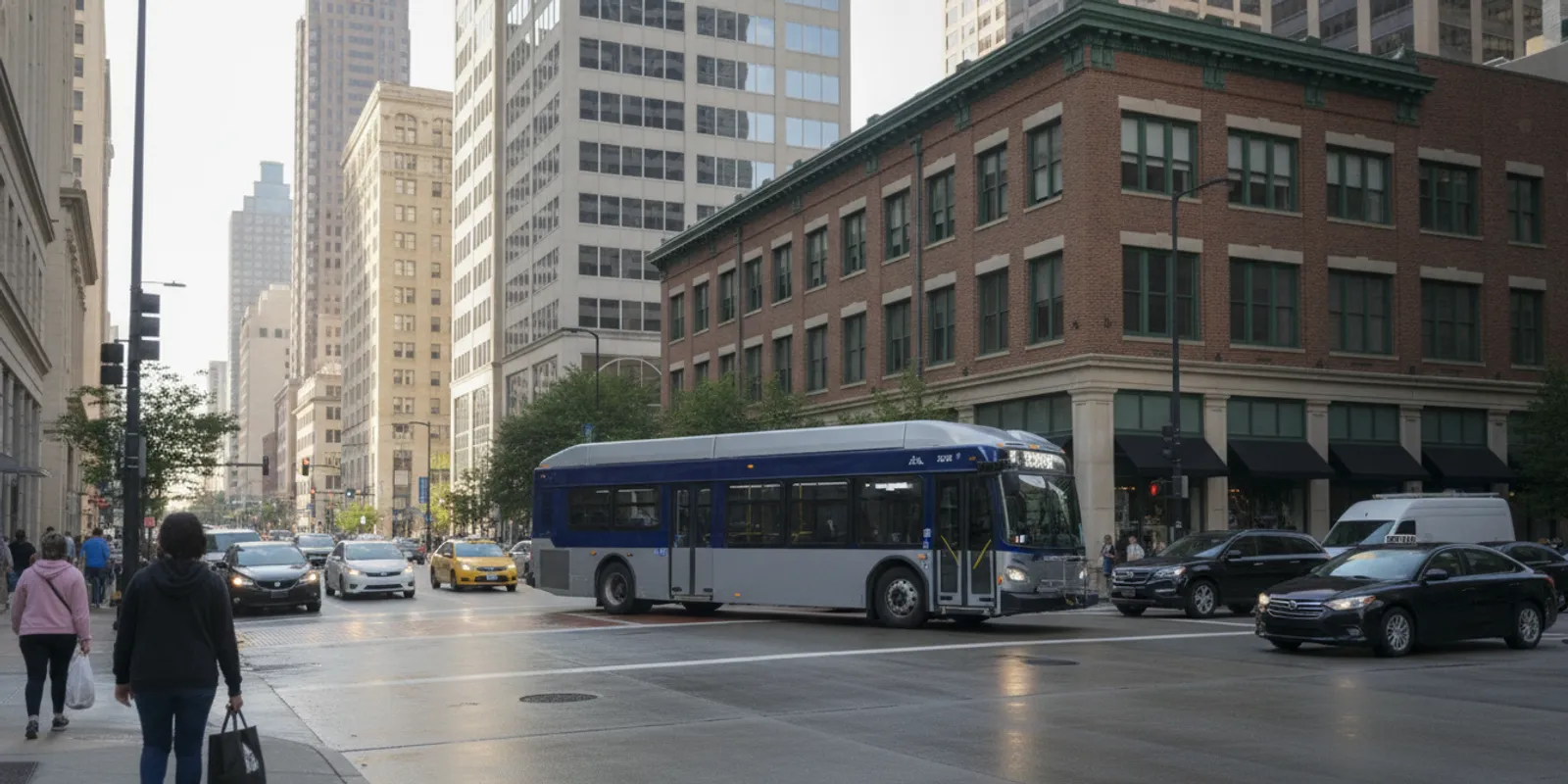
A bus accident claim against City of Atlanta can raise questions that do not come up in an ordinary car crash. The first step is to identify who owned and operated the bus, then determine what notice rules, evidence, and deadlines may apply. Those answers depend on the facts, and a bus operating in Atlanta is not necessarily a City of Atlanta bus.
Start by identifying the bus operator
“City bus” is often used casually to describe any public bus seen around Atlanta. Legally, the label may not identify the entity responsible. A bus may be operated by the City, a regional transit authority, a school system, a private company, or another public agency. The vehicle owner, transit agency, employer of the driver, and entity responsible for maintenance may not all be the same.
Write down what you can recall: the route number, bus number, name or logo, direction of travel, nearby stop, and the time and date. Photograph the bus or its markings if possible. Keep a ticket, pass, trip confirmation, or other record showing the route. These details can help establish which organization controlled the vehicle and which organization may have relevant records.
Do not assume that a crash in Atlanta involving a public bus creates a claim against the City of Atlanta. For example, a regional transit provider may operate a bus within the city. A school bus or contractor-operated shuttle can involve a different set of entities. Confirm the operator before sending a formal claim notice. A notice sent to the wrong entity may not protect a claim against the right one.
Bayuk Pratt’s bus accident information explains the firm’s focus on bus crashes. The specific legal analysis still turns on the operator, the location, the crash circumstances, and the injury evidence.
What does it mean to evaluate a claim against the City?
Evaluating a claim means checking whether the evidence supports responsibility for the crash and whether the injured person can meet the legal and procedural requirements for seeking compensation. It is not simply a matter of proving that a bus was involved or that an injury followed. The investigation should connect a particular entity’s conduct to the collision and to documented losses.
In a negligence claim, the central questions often include whether the responsible person or entity had a duty to act with reasonable care, whether that duty was breached, whether the breach caused the crash and injury, and what damages resulted. A bus driver’s actions may be part of the analysis, but so may training, scheduling, vehicle inspection, maintenance, dispatch procedures, or the actions of another road user. Which issues matter depends on the evidence and applicable law.
A claim involving a local government also raises a separate question: whether immunity or a statutory notice requirement affects the claim. Government entities do not all have the same legal status, and rules that apply to the State of Georgia are not automatically the rules for a city or a transit authority. It is important to identify the defendant before drawing conclusions about immunity, notice, or deadlines.
Why do government claims have special notice and immunity questions?
A private driver’s insurer may be the first point of contact after a typical collision. A claim involving a city or another public body can require additional procedural steps. Georgia law includes specific rules for claims against municipalities, and the details can depend on the claim and the entity involved. Missing a required notice step can create a serious obstacle even when the underlying crash facts appear strong.
For a claim against the City of Atlanta, do not rely on a general online form, an informal email, or a conversation with an employee as proof that a legally sufficient notice was delivered. The City provides information regarding filing a claim against the City of Atlanta. Review the current instructions and have a qualified lawyer assess whether the required notice, content, recipient, and delivery method fit the specific claim. An administrative claim submission and a legally required notice can raise distinct issues; do not assume one automatically satisfies every requirement.
Notice is also not the same thing as filing a lawsuit. There may be more than one deadline, and a deadline can depend on the defendant, the type of claim, the injured person’s circumstances, and other facts. Do not calculate the last day by relying on a generic internet summary or by assuming the ordinary personal-injury deadline controls. A lawyer can identify potentially applicable deadlines and calendar them conservatively.
Government immunity is another distinct issue. It can limit whether and how a public entity may be sued, but it is not a one-line answer to every bus crash. The entity’s status, the activity involved, statutory provisions, and facts about the conduct may matter. A City vehicle, a transit authority vehicle, and a privately operated bus can lead to different immunity and liability questions. Avoid assuming either that a government defendant is automatically immune or that an injured person automatically has a claim.
How can you determine which entity may be responsible?
Build a list of everyone who may have had a role, then verify each one rather than guessing. The potentially relevant parties can include:
- The bus operator or owner: The entity that runs the service or owns the vehicle may have records about the trip, driver, and bus.
- The driver’s employer: The person driving may work for a public agency or a private contractor. Employment and agency relationships can affect who is responsible for conduct on the job.
- A maintenance provider: A separate company may inspect or repair the bus. Maintenance records can matter if a mechanical problem contributed to the crash.
- Another driver or road user: A motorist, cyclist, or pedestrian may have contributed to the collision. The presence of another potentially responsible person does not, by itself, resolve the bus operator’s role.
- A public entity responsible for the location: Road design, signals, or a hazardous roadway condition may warrant investigation in some crashes. The responsible road authority must be identified from the location and facts.
Use objective clues: route and vehicle identifiers, dispatch or trip records, police documentation, witness accounts, and information from the agency or company. A bus may carry the name of a service provider while being owned or maintained by another entity. If the operator is uncertain, preserve the details and ask a lawyer to help identify all potentially responsible parties promptly.
What evidence can help evaluate a bus accident claim?
Evidence should answer two related questions: how did the crash happen, and what harm did it cause? Collect what is available without putting yourself at risk or delaying medical care. Some records are controlled by a transit agency or contractor, so an injured person may need to request that they be preserved quickly.
Crash scene and vehicle evidence
If it is safe, photograph the location from several angles. Include the bus, vehicle damage, road layout, traffic controls, skid marks, debris, weather conditions, lighting, and any visible hazards. Record the nearest address or intersection. A short note about the sequence of events can be useful while your memory is fresh: where the bus was moving, what happened immediately before impact, and where people and vehicles ended up. Keep the note factual and separate what you observed from what someone else told you.
Photographs taken later may not show temporary conditions, and a scene can change. Do not return to a dangerous location to collect material. Police reports, nearby business or traffic cameras, and photographs taken by witnesses may help fill gaps. Ask witnesses for their names and contact details if they are willing to share them. Avoid asking people to adopt a particular version of events.
Transit and vehicle records
Potentially important records may include onboard video, exterior camera footage, GPS or location data, route and dispatch logs, driver schedules, incident reports, inspection records, repair history, and communications about the trip. Not every bus has the same equipment, and not every record will exist or be available to a claimant. Still, identifying the bus, route, date, and approximate time can help the responsible organization locate relevant material.
Some electronic records may be routinely overwritten or retained for a limited period. A prompt written preservation request can alert the entity that particular evidence may matter. It should identify the incident clearly enough to locate the records, including the date, approximate time, route or vehicle number if known, location, and people involved. A preservation request is not necessarily a substitute for formal claim notice, and it does not guarantee that every item will be kept. Counsel can help determine what to request and how to follow up.
Medical and loss records
Seek medical attention and follow the provider’s instructions. Keep copies of discharge papers, imaging reports, prescriptions, referrals, work restrictions, and bills. Make a record of appointments and how symptoms affect ordinary activities. If symptoms change or worsen, tell a medical professional; do not rely on an article or an insurance representative to decide what care is appropriate.
Keep pay stubs, employer attendance records, leave documentation, and other records of missed work or reduced duties. If an injury affects household responsibilities or regular activities, brief dated notes can help preserve details that may otherwise be hard to recall. Receipts for reasonable out-of-pocket expenses may also be relevant. Do not alter records or exaggerate symptoms; consistency between what is reported and what the records show matters.
How can you build a useful chronology from scattered records?
A chronological file can help show what happened, what was documented at the time, and which details still need confirmation. Start with a simple table or dated list for your own organization. Use separate columns or labels for the date, event, source, and whether the information is firsthand or reported by someone else. For example, record the crash time as an estimate if you do not know it exactly, then note whether the estimate comes from a phone timestamp, a trip receipt, a witness, or memory.
Next, place related records beside the event they document. A photograph can be labeled with its original date and the person who took it. A medical visit entry can identify the provider and the symptoms reported, while the original clinical record remains unaltered. A call with an agency can be logged with the contact’s name, organization, reference number, and the specific information requested. This lets a reviewer trace a statement back to its source rather than treating the summary as proof by itself.
Mark unresolved points clearly. If the bus number is uncertain, write “not confirmed” rather than selecting a number from memory. If two witnesses give different descriptions, preserve both accounts and note the difference without deciding who is right. If an important record has been requested but not received, record the request date and any response. A useful chronology is not a polished argument; it is a transparent map of the evidence and the gaps.
Keep an untouched copy of original digital photographs, messages, and documents. If you create working copies or summaries, store them separately and retain the originals. This practical separation reduces the risk that a note, crop, or edit will be mistaken for the original source. It also makes it easier to provide a lawyer with a coherent packet: core incident records, operator clues, medical documents, communications, and a short list of questions that remain open.
What should an injured person do after a bus crash?
There is no single sequence that fits every emergency. These practical steps can help protect health and preserve information:
- Address immediate safety and medical needs. Call emergency services when needed. Get evaluated by a medical professional, even if the full extent of an injury is not clear at the scene.
- Report the collision. Provide accurate information to responding officers and follow applicable reporting instructions. Ask how to obtain a report or incident number.
- Identify the bus. Write down its markings, route, number, operator, direction, and location. Photograph details only when safe.
- Collect contact information. Note the driver’s name or identification if available, witnesses’ contact information, and the names of responding agencies.
- Preserve records. Keep photographs, messages, travel records, medical documents, and expense receipts in one place. Save original files and avoid editing them.
- Be cautious when giving statements. You can provide truthful information, but avoid guessing about speed, distance, or fault. Ask for clarification if a question is unclear. Do not sign a release or accept a payment without understanding what it covers.
- Get advice promptly. Ask a lawyer to identify the operator, assess notice requirements, and determine what evidence should be preserved. Do not wait for treatment to end before asking about a time-sensitive notice issue.
These steps are not a substitute for urgent medical care or legal advice. If the injured person cannot handle paperwork, a family member may help preserve basic information, but formal decisions about a claim may require authority to act for that person.
How does a lawyer assess fault and the available evidence?
A careful review typically compares different sources rather than relying on a single account. The police report can identify parties and record an initial description, but it may not answer every question about fault. Video can show movement and timing, but it may have blind spots or begin after the key event. Medical records document treatment and symptoms, but they do not necessarily establish who caused the collision. Witness accounts may help, although people can have different views of the same event.
The investigation may examine whether the bus driver had time and space to respond, whether the vehicle was being operated safely for the conditions, and whether a mechanical or roadway issue contributed. It can also examine what the injured person and other road users were doing. The point is not to assume fault from the type of vehicle, but to test competing explanations against available evidence.
Georgia’s comparative-fault rules may affect recovery when more than one person contributed to an injury. How those rules apply is a legal question that depends on the facts and the parties. Statements made soon after an accident, photographs, video, and expert analysis can all matter. A claimant should be candid about facts that may be unfavorable; concealing or changing facts can undermine credibility and make the case harder to evaluate.
Responsibility may also be divided among multiple parties. For example, evidence might point to a driver’s conduct, a maintenance issue, another motorist, or a roadway condition. Each theory needs factual and legal support. Naming every possible entity without a basis is not the same as completing a reliable investigation.
How should you compare competing explanations of the crash?
Early accounts may describe the same event in different ways. One person may say the bus changed lanes abruptly; another may recall that a car entered the lane first. A passenger may remember a sudden stop but not see the traffic ahead. Instead of choosing the version that sounds most persuasive, list what each account actually establishes and what it leaves unanswered. The distinction between observation and inference matters: “I saw the bus move left” is different from “the driver was avoiding a collision.”
Then look for evidence that can test the explanations. Vehicle damage may help show points of contact, though damage alone rarely supplies the entire sequence. A camera angle may show a lane change but not a signal or the view from the driver’s seat. A route record can identify the bus and approximate trip, while a dispatch log may provide timing. Road geometry, signal placement, weather, and visibility may help explain what a driver could see. Each item has limits, so a sound evaluation considers how the sources fit together rather than treating one as conclusive.
Consider a hypothetical example: a passenger is injured when a bus brakes sharply near an intersection. The sudden stop is a fact the passenger may describe, but it does not alone establish why the driver braked or whether the maneuver was unreasonable. The review might ask whether another vehicle entered the bus’s path, whether the bus was approaching a signal, what nearby video shows, and whether passenger injuries are documented. The same injury event can therefore lead to different liability conclusions depending on the surrounding evidence.
Keep a neutral record of facts that may help or complicate the claim. If the passenger was standing, if another vehicle was involved, or if the event occurred during a sudden traffic maneuver, those details should be preserved rather than omitted. A candid account lets counsel investigate the full sequence and assess possible arguments from each side. It also avoids turning an early assumption into a fixed narrative before records are reviewed.
What losses may be considered?
The types of damages that may be recoverable depend on the law, the proof, and the circumstances of the claim. In an injury case, the evaluation may consider reasonable medical expenses, future care supported by evidence, lost income, reduced ability to earn, and the effect of the injury on daily life. The seriousness and duration of symptoms, treatment, and limitations can all affect how a claim is assessed.
Keep in mind that a bill, diagnosis, or missed shift does not automatically establish that a particular defendant must pay it. The evidence must connect the loss to the collision and support the amount. An insurer or public entity may dispute causation, the need for treatment, the amount of a charge, or whether an injury existed before the crash. Complete records and a consistent account of symptoms can help make the claimed losses understandable.
Do not estimate a final value from a settlement story about another person. Two crashes that sound similar can differ in liability evidence, injuries, treatment, available coverage, parties, and procedural issues. A responsible assessment is based on the individual record, not a promised figure or a general formula.
How do claim notice, settlement discussions, and a lawsuit fit together?
It helps to treat these as separate stages. First comes identifying the proper entity and checking any required notice. At the same time, relevant evidence should be preserved and the injury documented. A claim review may then involve exchanging information and discussing whether resolution is possible. If a dispute cannot be resolved, litigation may be considered, subject to applicable requirements and deadlines.
Submitting notice does not establish fault, prove damages, or guarantee payment. It is a procedural step, and a claimant may still need evidence that the defendant was legally responsible. Likewise, beginning settlement discussions does not necessarily pause a legal deadline. Do not assume that an adjuster’s ongoing review, a promise to call back, or a request for medical records extends the time to take formal action.
A settlement release can have lasting consequences. Before signing, understand whether it resolves all claims arising from the crash, whether it covers only one party, and whether it affects future claims or medical expenses. If an injury is still being evaluated, the effect of settling before its course is clear deserves careful attention. A lawyer can explain the document and the choices; no one should feel pressured to sign something they do not understand.
What if the bus was not operated by the City?
If the evidence points to another public entity or a private contractor, the City’s claim procedure may not be the right one. Different public bodies can have different statutory frameworks, notice rules, and deadlines. A contractor may have its own insurer and records, while a public agency may have separate responsibility for the service or vehicle. The correct approach is to identify the legal entity and its role, then evaluate the applicable rules rather than sending the same notice to every name associated with the route.
When more than one entity may be involved, prompt identification matters. A driver’s employer may not be obvious from the vehicle’s appearance. A transit agency may use contractors for some operations, and maintenance can be handled separately. Ask for identifying information through appropriate channels and preserve the incident details that let the operator trace the trip. A lawyer can investigate relationships that are not apparent to a passenger.
For broader information about bus crashes and representation, see Bayuk Pratt’s bus accident page. The page is a starting point, not a determination that the firm, the City, or another operator is responsible in a particular matter.
A practical claim-evaluation checklist
When you begin organizing the matter, a simple checklist can reveal what is known and what still needs confirmation. It also helps keep separate facts, open questions, and assumptions. You do not need to solve every legal issue on your own. The goal is to preserve useful information and make a clear, organized account available to the professional who reviews the claim.
- Incident basics: Record the date, approximate time, exact location, direction of travel, route, and weather or lighting conditions. If you are uncertain about a detail, label it as an estimate.
- People and entities: List the injured person, bus driver if known, other drivers, witnesses, responding officers, transit operator, and any company or agency named in incident documents.
- Physical evidence: Preserve original photographs, video, damaged property, transit tickets, and vehicle or route identifiers. Keep a copy in a secure location and note who took each photo and when.
- Health records: Keep a timeline of symptoms, providers, appointments, treatment instructions, and changes in ability to work or manage daily tasks. Store bills and explanations of benefits with the related visit records.
- Communications: Save letters, emails, claim numbers, contact names, and notes of calls. After a phone conversation, write down the date, who spoke, and what was discussed.
- Unanswered questions: Note whether the bus was in service, which entity operated it, whether a camera captured the event, and whether a roadway or mechanical issue may be involved. Treat these as investigation questions, not established facts.
Organize material by date instead of trying to write a polished account immediately. A dated timeline can show how information developed and which records remain missing. Preserve original documents and messages; do not add annotations to a source file or delete communications that seem unimportant. If you create a summary for your own use, distinguish what you personally saw from information you learned later.
A lawyer may ask about prior injuries, earlier treatment, or other events that could explain a symptom. Answer accurately. Prior medical history does not automatically decide whether a new injury occurred, but it can affect how causation is evaluated. A complete record lets the lawyer assess both helpful and challenging facts rather than being surprised later.
How should you respond to calls from an insurer or agency?
A claims representative may contact an injured person to ask about the crash, request documents, or discuss resolution. It is reasonable to ask who the representative works for, which entity the representative represents, the claim or incident number, and what information is being requested. Make a record of the contact and ask for important requests in writing. Do not assume that the person contacting you represents your interests.
Give truthful information, but do not guess to fill gaps in memory. If you do not know the speed, distance, or exact timing, say so rather than choosing a number. If you are still receiving medical care, explain that your treatment is ongoing. A rushed statement may omit context or turn an estimate into a supposed fact. You can ask to review a written statement before signing it and seek legal advice before giving a recorded statement or signing a broad authorization.
Requests for medical records deserve attention to scope. A request limited to records relevant to the claimed injury is different from a broad release that permits access to extensive unrelated history. Understand what records will be disclosed, to whom, and for what purpose before authorizing release. Keep a copy of any form you sign. If you are unsure what a form covers, pause and ask a lawyer to explain it.
Do not post speculation about the crash, injuries, or fault on social media. Public posts, photos, and comments can be viewed without the context you intended. This is not a reason to hide relevant facts or delete existing material. Preserve information and discuss questions about communications with counsel.
If someone offers money early, first find out what the offer is intended to resolve and whether accepting it requires signing a release. A payment may be described as resolving some or all claims, and the written terms control. Consider whether the injury and future needs are understood before settling. The amount, timing, and consequences of a settlement depend on the individual claim; there is no universal rule that an early offer is either fair or unfair.
What can complicate the evaluation?
Several issues can make a bus claim difficult to assess even when the injured person knows a crash occurred. The operator may be unclear, records may be held by different organizations, and public-entity notice rules may require quick action. Liability may be disputed if witnesses describe different movements or if camera footage is incomplete. These complications are reasons to preserve what is available and get specific guidance, not reasons to assume that no claim exists.
Passengers may have limited control over the collision. A passenger often did not choose the bus route, driver, vehicle condition, or manner of operation. Still, the facts must establish how the injury happened and which party, if any, bears legal responsibility. Keep trip records and identify where you were sitting or standing, what the bus was doing, and whether another vehicle or an abrupt movement was involved.
Injuries may become clearer over time. Pain, mobility limits, or other symptoms can change after the initial evaluation. Follow medical guidance and make a contemporaneous record of changes. Do not assume that a lack of dramatic symptoms at the scene proves there was no injury; equally, do not state a diagnosis that a medical professional has not made. A careful record connects later treatment to the timeline without substituting personal guesses for medical conclusions.
Records may be divided among several custodians. The transit operator may hold route data, a contractor may hold employment or maintenance information, police may hold the crash report, and medical providers hold treatment records. Each organization may have its own process for requests. An informal request to one employee may not reach the person responsible for preserving relevant material. Record each request and response, and ask counsel whether a formal preservation or records request is appropriate.
Conflicting accounts need to be tested. A driver, passenger, witness, and another motorist may each perceive the event differently. Differences do not automatically mean someone is lying; timing, vantage point, and stress can affect recall. A sound investigation compares accounts with physical evidence and available records. Avoid contacting witnesses repeatedly to press them to agree with one version. Preserve their independent observations and let the evidence be evaluated.
There may be several independent deadlines. A public entity, private contractor, and individual driver may be subject to different procedural rules. A notice sent to one party does not necessarily notify another, and negotiations with one insurer may not suspend a deadline involving a different party. Keep a list of each potentially responsible entity and ask counsel to identify the relevant notice and filing requirements for each one.
Questions people ask after an Atlanta bus accident
Is every public bus crash in Atlanta a claim against the City of Atlanta?
No. A bus can operate in Atlanta without being owned or operated by the City. Check the vehicle markings, route information, incident records, and operator details. Confirm the responsible legal entity before relying on a notice procedure.
Is telling the driver or a City employee enough to preserve a claim?
Do not assume so. An informal report or conversation may be useful for documenting the incident, but it may not meet the requirements for formal notice. Review the City’s current claim instructions and get legal advice about the proper recipient, content, delivery, and timing for the specific claim.
How long do I have to make a claim?
There is no safe single deadline to apply to every bus accident claim. The responsible entity and type of claim can affect which notice and lawsuit deadlines apply. Some municipal claims involve a notice period separate from the deadline to file suit. Seek legal guidance promptly instead of waiting to learn the deadline from an insurer or an online article.
What if I do not know the bus number or operator?
Write down everything you do know, including the date, approximate time, location, route, direction, stop, and visible markings. Preserve photos, transit receipts, witness details, and the police or incident number. Those clues may help identify the vehicle and operator, particularly if you act before records are no longer readily available.
Can I make a claim if another driver also contributed?
Possibly, but responsibility and any effect of shared fault require a fact-specific legal analysis. Investigators may need to review each driver’s actions, the bus’s movement, roadway conditions, and other evidence. Do not assume another person’s involvement automatically defeats a claim or proves that the bus operator is responsible.
Talk with Bayuk Pratt about your situation
Getting a claim evaluated
A bus accident claim against the City of Atlanta should begin with careful identification of the operator and a prompt review of notice and deadline issues. Preserve the details of the crash, seek medical care, and document losses while an investigation determines what evidence supports responsibility. Because rules can differ among cities, transit authorities, and contractors, a lawyer can help assess the specific entity and the next steps without promising a particular outcome.