
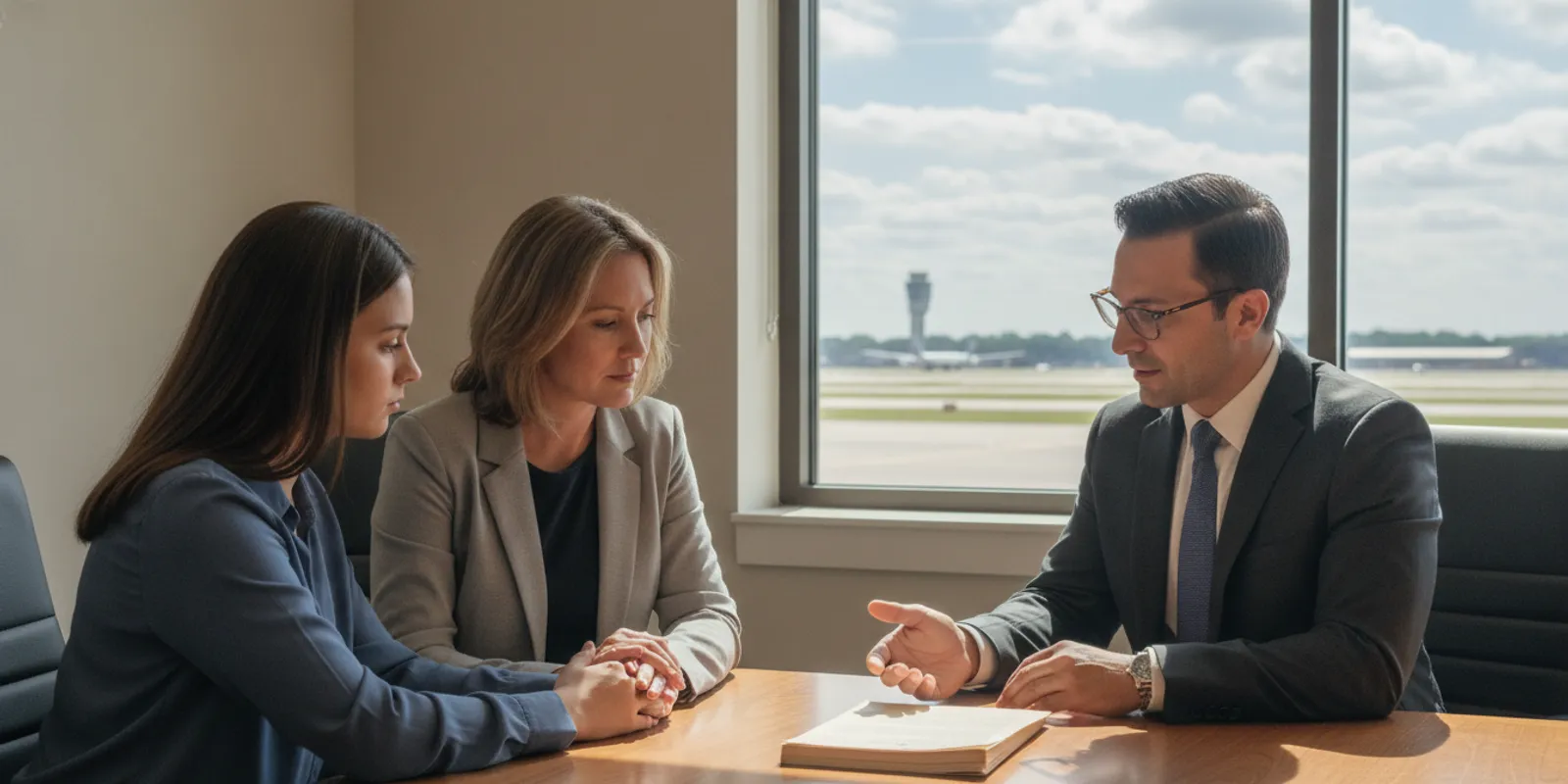
After an aviation accident, a family may have to make important decisions while still seeking medical care and trying to understand what happened. Choosing an aviation accident lawyer in Georgia is not simply a matter of comparing advertisements. Families should look for counsel who can explain how the investigation may unfold, identify possible sources of responsibility, protect time-sensitive evidence, and prepare a serious injury or wrongful-death claim for the possibility of litigation. The right questions can help you assess whether a lawyer’s experience and approach fit the facts of your situation.
Start with the type of aviation incident
“Aviation accident” describes many different events. A private aircraft crash, a helicopter incident, an airline emergency, a charter-flight accident, and an injury at an airport may involve different evidence, companies, insurance arrangements, and legal questions. Even two incidents involving similar aircraft can have different causes and different potential defendants.
Before you assess a lawyer’s fit, be ready to describe what you know about the event, without guessing at a cause. Helpful starting points include:
- The date and general location of the incident.
- The kind of flight or activity involved, such as a private, commercial, charter, instructional, or recreational flight.
- Whether the injured person was a passenger, pilot, crew member, ground worker, or someone on the ground.
- What injuries occurred and whether treatment is ongoing.
- What agencies, companies, insurers, or investigators have contacted the family.
- Whether anyone has asked for a recorded statement, medical authorization, document, or signature.
You do not need to know the technical cause to have an initial conversation. Early reports may be incomplete. A witness may have seen only part of the event, and information about the aircraft, its operation, and its maintenance may not yet be available. A careful lawyer should distinguish what is confirmed from what remains unknown, rather than presenting an early theory as a proven conclusion.
Ask whether the lawyer has handled matters with features similar to yours. Relevant experience might include investigating an aircraft crash, addressing aviation maintenance questions, analyzing a complex commercial relationship, or representing a seriously injured person in a case requiring multiple experts. There is no single credential that answers every question. The important point is whether the lawyer can identify the specific challenges in your matter and describe a credible plan for investigating them.
How to Choose an Aviation Accident Lawyer in Georgia
A firm’s website may say it handles aviation cases, but families should ask what that means in practice. Aviation cases can require prompt coordination with investigators, careful review of technical records, and analysis of how several decisions or failures may have contributed. A lawyer should be able to discuss the first steps in plain language and explain what work is likely to depend on access to records or expert review.
Ask questions such as:
- Who will lead the investigation and communicate with our family?
- How will the legal team identify and preserve relevant physical and documentary evidence?
- What kinds of aviation or engineering experts might be needed, and when would they be considered?
- How will you evaluate possible causes without reaching conclusions before the evidence is reviewed?
- What information do you need from us now, and what can wait?
- How will you keep us informed as new facts emerge?
Listen for a process that is specific but appropriately cautious. A lawyer should be able to explain that the investigation may involve aircraft and component records, maintenance history, operational decisions, witness accounts, communications, and applicable safety requirements, depending on the incident. The lawyer should also say that the relevant evidence varies and that specialists may be needed to interpret it. A sweeping promise about what “caused” the event before records are examined is a reason to ask further questions.
Ask how the firm will coordinate its own civil investigation with any official investigation. A public agency’s work can be important, but the family should understand who is gathering evidence for the legal claim and how the lawyers will keep track of information that may not be part of a public report. An official inquiry may have a different purpose and process from a civil case. A lawyer should explain how those processes relate without suggesting that a family can control an agency’s investigation or dictate its conclusions.
Also ask how the firm decides what should happen next. The first days and weeks can be uncertain. A lawyer may need to wait for access to certain materials while still taking steps to protect evidence and document the family’s account. A plan can be staged: immediate preservation and communication, followed by records review and expert analysis, then a more developed assessment of legal theories and potential claims.
Understand why evidence preservation matters
Some information in an aviation case may be held by organizations or individuals outside the family’s control. This can include aircraft and component records, maintenance documents, flight and dispatch records, training information, communications, surveillance video, photographs, and records kept by a business or public entity. Depending on the event, physical components or wreckage may also be relevant. Evidence can be altered, moved, overwritten, or lost through routine operations and the passage of time.
Families can help preserve what they already have, without interfering with an official investigation or attempting to collect restricted material. Keep original photographs, messages, emails, letters, travel records, receipts, and documents related to the incident. Save copies in a secure place and note when and how you received them. If someone sends a communication about the event, preserve the full message and its attachments. Avoid editing images or adding annotations to original files; if you need to make notes, keep them separately.
Write down your own recollection while it is reasonably fresh. Include the date, approximate time, location, who was present, and what you personally saw or heard. Separate firsthand observations from what another person told you. If your memory changes or you learn new information, add a dated note instead of rewriting the original account. This can help distinguish contemporaneous recollection from later information.
Do not enter a restricted site, touch wreckage, remove parts, or attempt to inspect an aircraft or equipment. Do not approach witnesses in a way that could interfere with an investigation or make them feel pressured. Follow instructions from responders and investigators. If you learn that relevant video, records, or physical items may be at risk of being lost, tell your lawyer promptly so the legal team can assess the appropriate formal steps.
Ask a prospective lawyer how the firm handles preservation requests and chain-of-custody concerns. The answer should reflect that the firm will not ask a family to take unsafe or unauthorized action. It should also recognize that aviation evidence may be technical, held by multiple organizations, or subject to official procedures. The legal team’s job is to identify what matters, act through appropriate channels, and document how evidence is obtained and reviewed.
Ask how the lawyer will evaluate multiple parties
Aviation incidents do not always point to one person or organization. Depending on the facts, a review may consider the actions or responsibilities of a pilot, aircraft owner, operator, charter company, maintenance provider, component manufacturer, training organization, airport operator, or another party. A person or business may have several roles. For example, ownership, operation, maintenance, and control of a flight may be divided among different entities.
This does not mean that every listed party is legally responsible. It means that a lawyer should investigate the relationships and duties relevant to the particular event before narrowing the case. A useful question is: “How will you identify everyone who may have contributed, and how will you determine which relationships matter under the facts and applicable law?”
Listen for a willingness to follow the evidence across organizational boundaries. A thorough review may need to establish who made decisions, who possessed relevant records, who performed inspections or repairs, and who had authority over the activity at issue. Contracts and business arrangements may be relevant, but their existence alone does not settle liability. The lawyer should explain that responsibility depends on facts and law, not on the number of companies named.
Ask how the legal team avoids locking into a theory too early. If an investigation starts with one apparent cause, other possible contributing factors may be overlooked. A lawyer should be willing to test explanations against technical records, witness accounts, and expert analysis. The goal is not to make the case sound more complicated than it is. It is to examine the reasonable paths the evidence supports before deciding how to present the claim.
For a family, communication can become difficult when several insurers or organizations are involved. Ask who will handle incoming contacts and how the firm will advise you if an insurer requests a recorded statement, a broad authorization, or a quick settlement discussion. Do not assume that a person who contacts you has explained every possible interest involved. Before signing or giving a detailed statement, ask a lawyer to review the request and explain the possible consequences.
Evaluate aviation knowledge and expert use
A lawyer does not need to personally pilot an aircraft or perform engineering analysis to represent a client in an aviation case. But the legal team should understand how to identify questions that require specialized expertise and how to use experts responsibly. Aviation matters may involve subjects such as aircraft systems, maintenance practices, human factors, operations, weather, air traffic, or accident reconstruction. Which fields matter depends on what happened.
Ask how the firm selects and works with experts. A strong answer may explain that experts are chosen for relevant experience, independence, and the specific questions in the case. Ask when the team would bring an expert into the investigation, what materials an expert would need, and how the firm evaluates competing opinions. The lawyer should not imply that an expert’s involvement alone proves a claim.
It is also reasonable to ask how technical issues will be explained to a judge, jury, insurer, or family member who is not an aviation specialist. Counsel should be able to translate complex evidence into clear questions: What happened? What should have happened? What evidence supports that account? What alternative explanations need to be tested? This ability matters because the case may depend on making a detailed technical record understandable without oversimplifying it.
Families should be wary of confident technical conclusions offered in a first conversation without a review of the underlying information. A responsible lawyer can discuss possible lines of inquiry while being candid about uncertainty. Ask what facts could change the current assessment. A lawyer who identifies what remains unknown is not necessarily less prepared; in a developing investigation, that caution can be a sign of sound judgment.
Look for preparation that can withstand litigation
Many claims resolve without a trial, but a lawyer should be prepared for the possibility that the parties will disagree about responsibility, the significance of evidence, or the value of a claim. Trial readiness is more than saying that a firm is willing to go to court. It involves building a record, investigating facts, identifying and preparing experts, evaluating defenses, and developing a clear way to present the case if negotiations do not lead to an acceptable resolution.
Ask the lawyer to explain how the firm approaches a case from the outset. Useful questions include:
- How do you identify and test the defenses that insurers or companies may raise?
- How do you decide whether additional expert analysis is needed?
- Who would handle the case if it proceeds to litigation or trial?
- How do you prepare clients and families for the time and demands of a lawsuit?
- How do you decide whether a settlement proposal should be considered?
Look for an answer that treats negotiation and trial preparation as connected parts of one process. A lawyer should not promise that a case will go to trial, or that a particular result will follow. Instead, counsel can describe how the team will investigate, evaluate risks, explain options, and make decisions with the client’s informed input.
Ask about the lawyer’s personal role and the team supporting the case. Find out who will be your main point of contact, who will work on evidence and records, and how often you can expect updates. In a complex matter, a team may include lawyers, paralegals, investigators, and outside specialists. Clarity about those roles helps a family understand who is responsible for each part of the work.
Experience should be discussed in context. Ask whether the lawyer has handled serious injury or wrongful-death litigation with complex evidence, multiple parties, or substantial expert issues. If the lawyer discusses past results, remember that the facts and legal issues of another case may differ. No verdict or settlement can guarantee what will happen in a new matter.
Check communication, compassion, and capacity
Technical ability is important, but a family may work with its legal team through a long and difficult period. The lawyer should be willing to explain developments in ordinary language, answer reasonable questions, and give honest updates even when there is no final answer yet. You should not have to understand aviation terminology to take part in decisions about your case.
During the consultation, notice whether the lawyer listens closely and asks questions that clarify your concerns. A good discussion should leave time for you to speak about practical needs, not only the legal theory. Some relatives may be managing treatment, work absences, funeral arrangements, travel, or caregiving. It is appropriate to ask how the legal team will communicate with the family and whether it can accommodate a preferred contact person or method.
Ask what a family should expect during the next few weeks and what issues might take longer to resolve. A responsible lawyer will not invent a precise timeline when the investigation, medical course, or legal process is uncertain. They can, however, explain the factors that affect timing, identify immediate decisions, and tell you when the next update is expected.
Clarify who will answer routine questions and how to reach that person. Ask how urgent developments are handled and what response time you can reasonably expect. A firm’s accessibility matters most when it matches the needs of the case and the family. Clear expectations can prevent frustration and help you know where to turn when a new document or request arrives.
Understand fees and the consultation
Ask for a clear explanation of the fee arrangement before deciding to hire a lawyer. Bayuk Pratt handles cases on a contingency-fee basis: clients pay nothing upfront for the firm’s services and pay no fee unless the firm recovers compensation. Ask the firm to explain the agreement, how case expenses are addressed, and what happens if there is no recovery. Review the written terms and raise any questions before signing.
A free consultation is an opportunity to explain the situation, learn whether the firm may be able to help, and decide whether the communication feels right. You do not need a complete investigation file to begin that discussion. If you have documents, photographs, contact information, or correspondence related to the incident, you can ask whether it is useful to share them. Do not send sensitive materials through an unfamiliar channel; confirm how the firm wants to receive them.
Use the meeting to assess both legal fit and trust. Does the lawyer listen without pressuring you? Are uncertainties explained honestly? Do you understand the proposed next steps and who will handle them? Can the lawyer describe what the family should avoid doing while the investigation is underway? These practical measures may tell you more than a slogan or a long list of claimed specialties.
Prepare a focused set of questions
Families can feel overwhelmed in a first meeting. It may help to bring a short list and take notes. Consider asking:
- What facts about this incident do you need to understand before you can evaluate the legal issues?
- What immediate evidence-preservation steps may be appropriate, and what should our family avoid doing?
- How will you investigate possible responsibility across operators, owners, maintenance providers, manufacturers, or other parties if relevant?
- What aviation or technical expertise might be needed, and how would you decide?
- Who will be our primary contact, and how will the firm keep us updated?
- What are the main uncertainties, possible defenses, and next steps at this stage?
- How does the fee agreement work, including treatment of case costs?
- What would you need from us to decide whether the firm can represent our interests?
You may also want to ask what the lawyer thinks could make the case difficult. Every serious matter has uncertainties. The answer can help show whether counsel is being candid and whether the team has thought through possible obstacles. A thoughtful lawyer can describe what information is missing and how it might be obtained or tested, rather than guaranteeing that every challenge will be overcome.
After the consultation, compare the answers rather than trying to compare advertising claims. Did the lawyer discuss your actual facts? Did you understand the investigation plan? Were potential conflicts, fees, timing, and communication explained? Were you given room to decide without pressure? It is reasonable to speak with more than one lawyer if doing so helps your family make an informed choice.
Compare consultations with a consistent checklist
If you speak with more than one lawyer, use the same core questions in each conversation. This makes it easier to compare substance rather than confidence or presentation style. Keep notes under a few practical headings: experience relevant to the event, immediate evidence plan, likely technical questions, communication, fees and costs, and the next decision the lawyer recommends. You can record what the lawyer said without trying to decide immediately whether a legal theory is correct.
For example, one lawyer may explain that the first priority is preserving relevant records and identifying the entities that controlled the aircraft or activity, while another may focus only on an early account of the apparent cause. Ask each what information supports the proposed first step and what additional facts could change it. A sound plan should make room for uncertainty and explain how the investigation will move from initial questions to supported conclusions.
Do not treat the number of experts named in a meeting as a measure of case quality. Instead, ask what question each specialist might answer, what records or testing would be needed, and how the lawyer would evaluate an expert’s conclusions. Likewise, a long list of past cases is less useful than a clear explanation of how the experience relates to your matter. You are assessing the lawyer’s judgment, not simply counting credentials.
It is also reasonable to ask whether a lawyer sees a potential issue that might make representation unsuitable, such as a conflict or a mismatch between the firm’s current workload and the needs of the case. A direct answer can help you plan. If you need time to consider an agreement or discuss it with relatives, ask for that time. A consultation should give you information for a decision, not pressure you into making one before you understand the terms.
Take practical steps while the facts develop
While you are evaluating counsel, focus on preserving information and supporting the injured person or family. Keep a folder for medical and incident-related records. Maintain a list of people who contact you about the event and note the date, organization, and reason for each contact. Save written requests and do not discard envelopes or attachments that may show when something was sent.
Keep records of expenses and disruptions that may later help explain the effects of an injury. Depending on the situation, that may include travel for treatment, changes to household responsibilities, missed work, or out-of-pocket costs. Preserve existing documents and make a note of what each one relates to. Do not delay necessary medical care or make health decisions based on a legal claim. Discuss treatment with appropriate medical professionals.
Be cautious about public posts concerning the incident, injuries, or investigation. Avoid speculation and do not share private documents or images without considering the consequences. Do not assume that a private social account or a message to an acquaintance will remain private. If you are unsure whether to respond to a request for information, ask a lawyer for guidance.
Deadlines and legal procedures can depend on the parties involved, the type of claim, and the circumstances. Do not assume that an agency investigation, insurance discussion, or ongoing treatment automatically pauses a legal deadline. Ask counsel promptly to identify any deadlines that may apply to your situation. A lawyer can assess those issues based on the facts rather than offering a one-size-fits-all date.
Consider what makes an aviation claim different
Aviation cases often combine factual questions that families may not encounter in a routine vehicle collision. The aircraft may have traveled across state lines, records may be held by several businesses, and technical systems or operational decisions may require specialized review. The flight’s purpose and the injured person’s role can also affect which legal and insurance questions need attention. A lawyer should not treat every aviation event as a standard accident claim with a new label.
For a passenger, a review may need to identify who arranged the flight, who operated it, what agreements were signed, and what insurance may apply. The answers can differ for a scheduled airline trip, a privately arranged charter, or a flight connected to a business or recreational activity. For a pilot or crew member, questions may include employment, training, operating procedures, and the responsibilities of the entities involved. For a person injured on the ground, the inquiry may focus on where the person was, what activity created the risk, and which organizations controlled the relevant location or operation. These are possible lines of inquiry, not conclusions about any particular claim.
Aircraft ownership alone may not explain who made operational decisions. A company that owns an aircraft may not be the same entity that arranged a flight or performed maintenance. Likewise, a maintenance record can identify work performed without, by itself, establishing whether that work was proper or caused the incident. A lawyer should be prepared to trace the relationships among the parties and test what each one did, knew, or controlled, as the evidence permits.
Families may also need a lawyer to separate several overlapping processes. There may be an official safety investigation, conversations with insurers, medical care, employment or benefit questions, and a civil claim. Those processes can move on different schedules and ask different questions. Ask the lawyer how the firm will help you keep track of requests and avoid accidentally treating a conversation with one organization as a resolution of every issue. A clear plan can identify what requires an immediate response and what should first be reviewed.
If the incident caused a death, relatives may be grieving while trying to communicate with companies and manage practical responsibilities. Ask the lawyer who may be authorized to make decisions for the claim and what documents may be needed. The rules can depend on the circumstances and applicable law, so do not assume that every family member has the same legal role. The attorney should explain how the process may affect the family, answer questions with care, and avoid pressuring relatives to make decisions before they understand them.
When an injured person is still receiving treatment, the effects of the injuries may not yet be clear. A lawyer should explain why an early review of responsibility and evidence can be useful while also recognizing that a full assessment of harm may require time and medical information. The legal team should not direct medical care or substitute its judgment for clinicians. Its role is to understand how the injury has affected the person and family, preserve relevant records, and explain how those facts may relate to the legal claim.
Ask how the lawyer will adapt the investigation if the early explanation changes. New records, expert review, or witness information may point toward a different question than the one initially suspected. A sound process has room to revise its working understanding. The attorney should be able to explain how the team documents assumptions, checks them against evidence, and communicates material changes to the client.
Know what to expect after choosing counsel
Before signing an engagement agreement, read it carefully and make sure the person who will represent you has explained the terms. Ask who the agreement covers, what legal work is included, how the fee is calculated, and how case expenses are handled. Ask what happens if the representation ends before a recovery or if another lawyer later becomes involved. The written agreement controls, so request clarification of any language that is unfamiliar rather than relying on a quick verbal summary.
Once representation begins, the legal team may ask for a timeline, contact details, documents, and permission to obtain certain records. A request for records should be explained in context: what information is being sought, why it may matter, and who will receive it. Keep a copy of anything you provide and tell the lawyer if you discover more material later. If a request seems overly broad or you have questions about privacy, raise them before signing or sending it.
The lawyer may also ask you to direct inquiries from insurers, businesses, or other representatives to the legal team. Follow the guidance you receive, but keep copies of communications and promptly report new contacts. A lawyer cannot prevent every organization from reaching out, and the family should not ignore urgent medical, safety, or official instructions. The useful distinction is to avoid making statements or signing documents about a claim without understanding the request and receiving case-specific advice.
Ask how you will receive updates and what developments the team will share. Some periods may involve document gathering or expert review without a major visible event. That does not mean no work is occurring, but you should still know how to ask for an update and when to expect one. A practical arrangement might include a named contact, an agreed communication method, and a plan for reporting urgent questions or changes in the injured person’s condition.
Keep your own simple record of important dates, documents, and questions. A running list can make calls more efficient and reduce the pressure to remember everything during a stressful conversation. If information changes, such as a new witness contact or a request from an insurer, tell the legal team promptly rather than deciding on your own whether it matters. The lawyer can evaluate the information and explain what response, if any, is appropriate.
Consider whether the firm fits the case
Families evaluating an aviation accident lawyer in Georgia should look for a combination of sound investigation, careful evidence handling, the ability to assess multiple parties, access to relevant expertise, and preparation for contested litigation. They should also expect clear explanations, a workable communication plan, and a fee agreement they understand. No single answer proves that a lawyer is right for every case, but specific, candid answers can help distinguish a thoughtful process from unsupported promises.
Bayuk Pratt is an Atlanta personal injury and civil litigation firm that represents individuals and families harmed by serious accidents and wrongful conduct. Its attorneys describe a trial-ready approach informed by prior senior-level corporate defense experience. To learn more about the firm’s work involving aviation accidents, review the practice information and ask how the firm would evaluate the facts of your situation. Prior experience and results do not determine the outcome of any individual claim.
Talk with the firm about your situation
Frequently asked questions
When should a family contact an aviation accident lawyer?
Consider speaking with a lawyer as soon as practical after an aviation incident involving serious injury or death, especially if insurers or organizations have started requesting information. Early advice can help identify what records to preserve and what requests merit careful review. A consultation does not require you to know the cause of the incident.
Does an official aviation investigation decide who is legally responsible?
Not necessarily. An official safety investigation and a civil legal claim can have different purposes, procedures, and questions. Information from an official process may be relevant, but a lawyer should explain how it fits into a separate assessment of responsibility and damages under the applicable law.
Can more than one company or person be responsible?
Possibly. Depending on the facts, different parties may have had roles involving aircraft operation, ownership, maintenance, manufacture, training, or a location. Their involvement does not automatically establish legal responsibility. A case-specific investigation is needed to determine what duties applied and whether any conduct contributed to the harm.
What should we bring to a first consultation?
Bring what is readily available, such as incident details, contact information, photographs, correspondence, or documents from an insurer or investigator. You do not need to gather every record before seeking advice. Ask the firm how to send sensitive materials securely and avoid altering or discarding originals.
Will hiring a lawyer guarantee compensation?
No. A lawyer cannot guarantee a particular result. The outcome depends on the evidence, applicable law, the parties’ positions, and other case-specific factors. A responsible attorney can explain the investigation process, potential issues, and options as more information becomes available.
Taking time to ask focused questions can help your family choose counsel with an approach that fits the seriousness and complexity of the matter. Preserve what you have, avoid unsupported conclusions, and seek legal guidance promptly when you need help understanding the next step.