
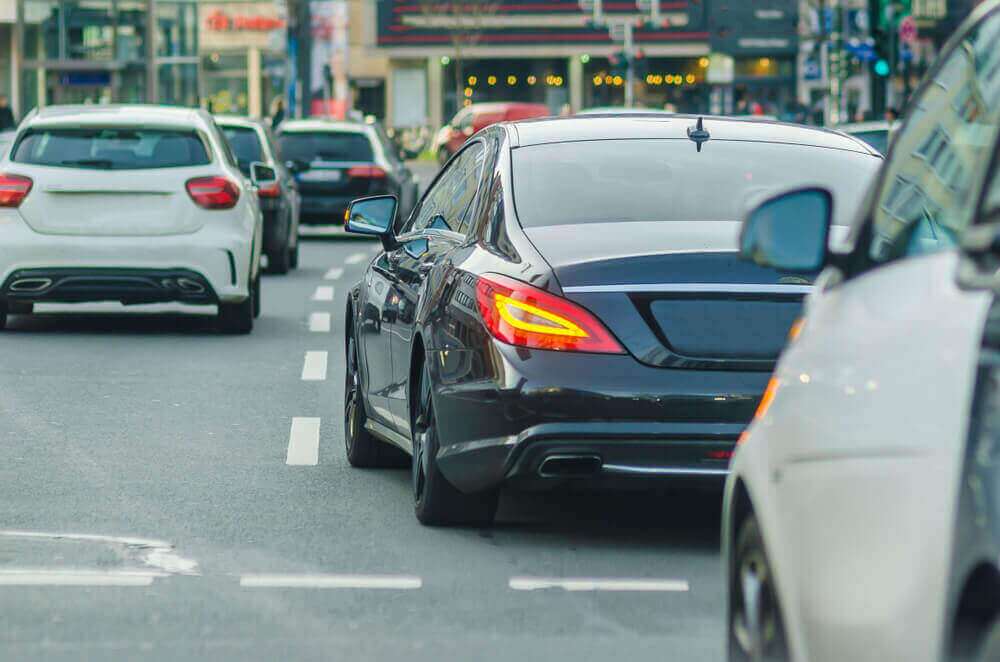
A lane-changing accident happens when a driver shifts into another lane in an unsafe manner, thereby striking a nearby vehicle.
These crashes tend to occur when motorists fail to check their blind spots, don’t use turn signals, or attempt risky maneuvers in heavy traffic. If you suffered injuries in a car accident caused by another driver’s careless lane change, you may have grounds to pursue compensation for your losses.
Georgia roads see countless lane change collisions each year, particularly on busy highways like I-285 and I-75. Understanding how these accidents occur and what the law says about them can help you protect your rights after a crash.
What Is an Improper Lane Change?
An improper lane change occurs when a driver moves from lane to lane without taking the necessary precautions to do so safely. These maneuvers put other motorists at serious risk of a collision.
Common examples of improper lane changes include:
- Switching lanes without using a turn signal
- Failing to check mirrors and blind spots before merging
- Cutting off another vehicle while changing lanes
- Drifting into an adjacent lane while distracted or drowsy
- Weaving between lanes in heavy traffic
- Changing lanes in a no-passing zone or construction area
Many lane-change accidents result in sideswipe collisions, in which two vehicles make contact along their sides. However, these crashes can also cause rear-end collisions when a driver cuts in too closely in front of another vehicle. Improper lane change accidents can result in serious injuries and significant vehicle damage, especially on highways.
Does Georgia Have Laws Governing Lane Changes?
Yes. Georgia has specific traffic laws that regulate how drivers must change lanes. Under O.C.G.A. § 40-6-123, drivers must stay entirely within a single lane whenever possible. They cannot move out of that lane until they have determined that the maneuver can be completed safely.
Georgia law also requires drivers to signal their intent to turn or change lanes. Under O.C.G.A. § 40-6-123, motorists must use their turn signals continuously for at least 100 feet before making a lane change. This gives other drivers time to react and adjust their speed or position.
When a driver violates these laws and causes a crash, their traffic violation can serve as strong evidence of fault in a car accident claim.
Causes of Lane Change Accidents
Many lane change accidents stem from improper lane changes, often due to driver error or negligence. Common causes include failing to use turn signals, neglecting to check rearview mirrors or blind spots, and attempting to pass in areas where it is not permitted. Speeding and making sudden lane switches to avoid slower traffic or obstacles can also lead to dangerous situations, particularly in heavy traffic or poor weather conditions.
Distracted driving is another significant factor—drivers who are texting, talking on the phone, or otherwise not paying full attention are more likely to make unsafe lane changes. Georgia car accident lawyers frequently see cases where a simple lapse in judgment while changing lanes leads to a serious car accident.
Who Can Be Liable in a Lane Change Accident in Georgia?
The driver who made the unsafe lane change typically bears responsibility for the resulting crash. However, liability can sometimes extend to other parties, depending on the circumstances.
Potentially liable parties in a lane change accident may include:
- A negligent driver whose improper lane change caused the accident
- A distracted driver who changed lanes while texting or talking on the phone
- An aggressive driver who weaved through traffic recklessly
- A fatigued truck driver who drifted out of their lane
- A trucking company that pushed its driver to meet unrealistic delivery schedules
- A vehicle manufacturer if a defective turn signal or mirror contributed to the crash
An experienced attorney can investigate your case and identify all parties who may share responsibility for your injuries.
How Do You Prove Who Was At Fault in a Georgia Lane Change Accident?
Establishing fault in lane-changing accidents in Georgia requires gathering evidence that shows the other driver acted carelessly. Helpful evidence in a lane change accident case might include:
- The official crash report from the responding police officer
- Video footage showing the collision (traffic camera, dash cam, etc.)
- Photographs of vehicle damage and the accident scene
- Testimony from eyewitnesses who saw what happened
- Data from the vehicles’ event data recorders
- Any traffic citations the other driver received
A skilled car accident attorney will know how to collect and preserve this evidence before it disappears. Time-sensitive evidence, such as surveillance footage, may be deleted quickly, so acting swiftly matters.
Accident Investigation
A thorough investigation is essential after a lane-change accident to determine fault and gather the necessary evidence for a claim. This process often involves reviewing traffic camera footage, collecting witness statements, and examining the police report from the accident scene. Accident reconstruction experts may be brought in to analyze vehicle damage and the sequence of events leading up to the crash.
A car accident attorney can help guide you through the investigation process, ensuring that all relevant evidence—such as accident scene photos and vehicle damage reports—is collected and preserved to support your case.
Witness Statements
Witness statements are a crucial part of building a strong case following a lane-change accident. Independent witnesses can provide valuable, unbiased accounts of what happened, including details such as whether a driver signaled before changing lanes or checked their blind spots. Their observations can help clarify which driver changed lanes and how the accident unfolded.
Collecting witness statements promptly is important, as memories can fade and details may be forgotten over time. A personal injury attorney can assist in identifying and interviewing witnesses, ensuring their statements are accurately recorded and used effectively to support your personal injury claim.
Medical Records and Evidence
Documenting your injuries and losses is vital after a lane change accident. Medical records, including hospital reports, treatment notes, and medical bills, provide clear evidence of the severity and impact of your injuries. In addition to medical documentation, accident scene photos, vehicle repair estimates, and records of lost wages can all strengthen your claim for fair compensation.
An experienced accident lawyer can help you gather and organize all necessary medical records and supporting evidence, ensuring your claim is as strong as possible.
Could Both Drivers Be At Fault for the Accident?
Georgia follows a modified comparative fault system, which means more than one driver can share blame for a crash. For example, if a driver changed lanes without signaling while the other driver was speeding, both drivers might bear partial responsibility.
Under this system, you can still recover compensation as long as you were less than 50 percent at fault for the collision. However, your award will be reduced by the percentage of fault you bear. If you were 20 percent responsible and your total losses equal $100,000, you could receive $80,000.
Insurance companies often try to place blame on injured victims to reduce the amount they owe. Having a knowledgeable lawyer on your side can help you fight back against these tactics and protect your right to fair compensation.
What Are Common Lane Change Accident Injuries?
Lane change collisions can cause significant injuries. The severity often depends on the speed of the vehicles and the angle of the collision.
Common injuries from lane change accidents include the following:
- Whiplash and other neck injuries
- Back and spinal cord damage
- Broken bones
- Traumatic brain injuries
- Internal organ damage
- Cuts, bruises, and lacerations
- Shoulder and arm injuries from bracing against the steering wheel
Some injuries may not show symptoms right away. Seeking medical attention promptly after a crash protects both your health and your ability to connect your injuries to the collision.
What Financial Compensation Can You Seek After a Lane-Changing Accident?
Victims of lane change accidents in Georgia can file car accident claims to seek compensation for their losses, such as:
- Medical bills for emergency care, surgeries, and ongoing treatment
- Lost wages from time away from work during recovery
- Reduced earning capacity if injuries prevent you from returning to your previous job
- Physical pain and emotional distress
- Loss of enjoyment of life when injuries limit your daily activities
- Vehicle repair or replacement costs
Contact a Georgia Car Accident Lawyer
When you need help after a lane-change accident, Bayuk Pratt’s dedicated team is here to help. Our founding partners spent years as senior attorneys at two of the world’s largest defense law firms, defending corporations and insurance companies. Now, they use that insider knowledge to fight for injured victims throughout Atlanta and Georgia.
With more than 50 years of combined experience and over $2 billion recovered in results for our clients, our battle-tested trial lawyers know how to take on insurance giants and win. We will prepare your case as if it is going to trial from day one, building the strongest possible argument for the compensation you deserve.
Contact us today for a free consultation.